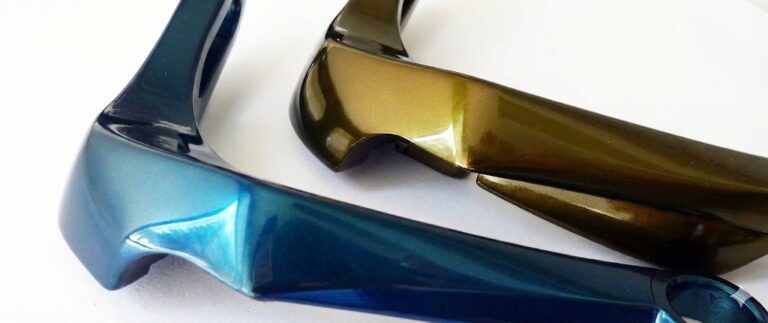
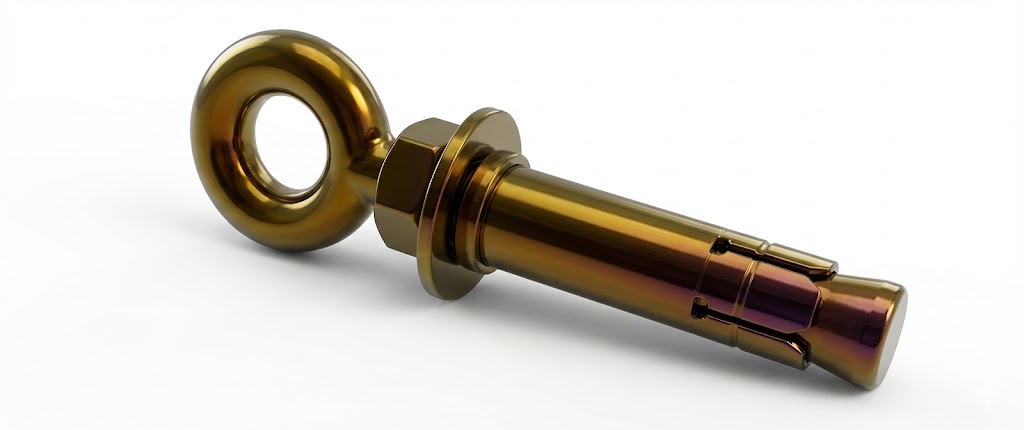
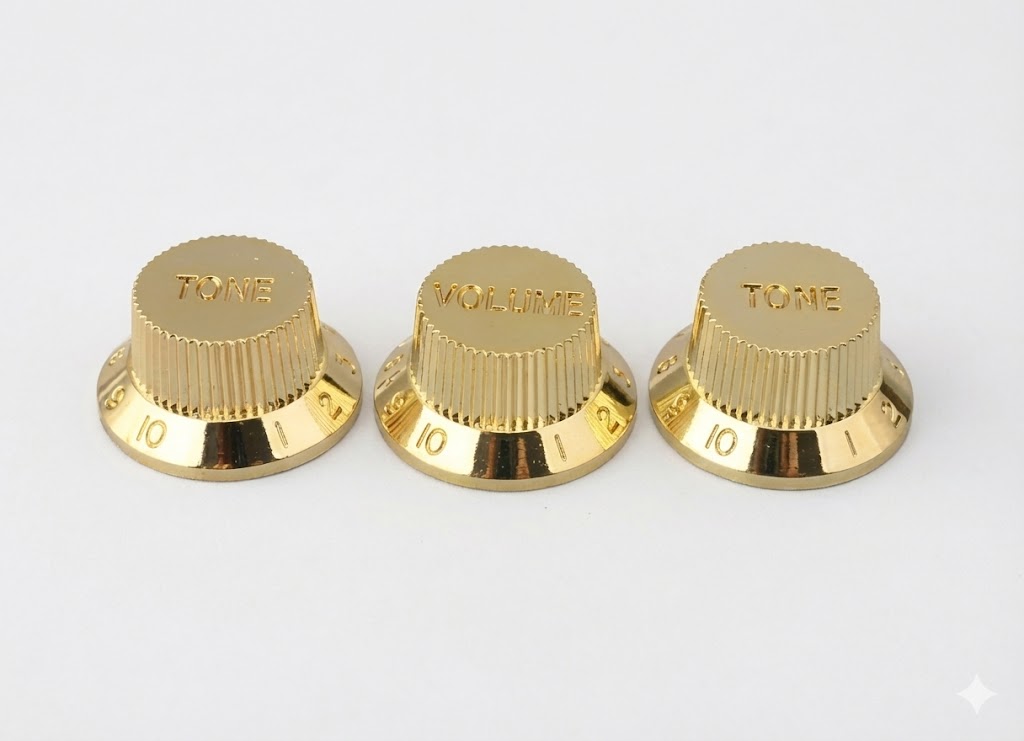
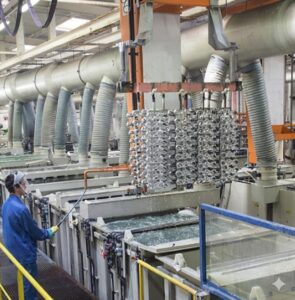
Brighteners, carriers, levellers, wetting agents, stress relievers, anti-pitting agents, hardeners — for Nickel, Chrome, and Zinc electroplating baths. The difference between a dull deposit and a mirror-bright, defect-free coating.
7 additive types for Watts nickel, semi-bright, and full-bright nickel baths — controlling brightness, levelling, stress, pitting, and current efficiency.
Saccharin-based compound that reduces internal tensile stress in bright nickel deposits. Prevents cracking, peeling, and delamination — essential for thick nickel deposits and electroforming. Also improves ductility and adhesion of subsequent chrome layers.
Sulphonic acid derivatives (butynediol, propargyl alcohol, or ethoxylated acetylenic diol derivatives) that produce a mirror-bright, levelled nickel deposit. Work synergistically with primary brighteners for maximum brightness and levelling efficiency.
Polyether-based polymer that improves current distribution and throwing power across complex part geometries. Acts as a carrier for secondary brighteners, ensures uniform coverage in recesses and blind holes, and reduces pitting tendency.
Quaternary ammonium compounds or coumarin derivatives that fill surface scratches and machining marks during deposition — producing an exceptionally smooth, mirror-like nickel surface even on substrates with surface roughness.
Low-foaming sulphonate surfactant that reduces surface tension in the nickel bath — allowing hydrogen gas bubbles to detach easily from the cathode surface. Prevents pitting caused by trapped gas and ensures uniform electrolyte contact with the substrate.
Specially formulated surfactant blend that eliminates pitting defects — small round depressions caused by organic contamination or gas entrapment. Particularly important in barrel plating and when plating on cast or porous substrates.
Organic compound that reduces internal stress in thick nickel deposits — especially important for electroforming, engineering nickel, and hard nickel applications. Improves ductility and prevents micro-cracking in high-deposit-thickness applications.
4 specialist additive types for chromic acid (hexavalent) and trivalent chrome baths — catalysts, wetting agents, hardeners, and crack-free promoters.
Activates the chrome bath by providing the necessary sulphate or fluoride ions to initiate chromium deposition from chromic acid. The correct CrO₃:SO₄²⁻ ratio (typically 100:1) is critical for current efficiency and deposit quality. Also used in mixed sulphate-fluoride catalysts for improved brightness and coverage.
PFAS-free surfactant that serves a dual role: reduces surface tension on the bath surface to suppress chromic acid mist and fume (critical for operator safety and air quality compliance), and prevents pitting on chrome deposits by ensuring even electrolyte contact with the cathode.
Specialty additive for hard chrome applications that maximises deposit hardness (up to 950–1100 HV) and wear resistance. Used in hard chrome baths for hydraulic cylinders, piston rods, rollers, and industrial components requiring extreme wear and abrasion resistance.
Controls the micro-crack network in chrome deposits — either producing crack-free chrome for maximum corrosion protection (thick deposits for engineering) or controlled micro-cracked chrome for decorative applications where the Ni-Cr corrosion couple is optimised for better salt spray performance.
5 additive types for acid chloride, alkaline non-cyanide, and cyanide zinc baths — brighteners, carriers, levellers, wetting agents, and mid-range additives for every zinc plating system.
High-activity brightening agent that produces a brilliant, mirror-bright zinc deposit. Used in acid zinc chloride baths to achieve maximum brightness and decorative appeal. Controls grain refinement for fine, reflective zinc crystals.
Polyethylene glycol or polyamine-based polymer that improves throwing power and coverage in low current density areas — essential for plating complex parts, recesses, and threaded components in acid zinc baths.
Low-foaming surfactant specifically designed for zinc baths that prevents hydrogen pitting, improves substrate wetting, and ensures uniform contact between the electrolyte and the part surface throughout the plating cycle.
Formulated for applications requiring a balance of brightness, ductility, and corrosion resistance. Mid-range zinc additives produce semi-bright deposits with better ductility than full-bright systems — ideal for components requiring post-plate forming, bending, or crimping.
Proprietary brightener system specifically developed for alkaline non-cyanide zinc plating baths. Produces bright, fine-grained deposits with excellent throwing power — compatible with NaOH/ZnO electrolyte systems for barrel and rack plating.
Electroplating additives don't plate themselves — they modify how the metal deposits by adsorbing onto the cathode surface and influencing nucleation, grain growth, and surface tension.
Brighteners adsorb at grain boundaries, inhibiting crystal growth and forcing finer, more reflective grain structure — the basis of a bright deposit.
Levellers concentrate preferentially at high current density peaks, depositing slower in these areas and building up recesses — producing a macroscopically flat surface.
Carriers and conditioners improve throwing power by modifying the polarisation behaviour of the cathode, allowing deposition into low CD recesses, blind holes, and threads.
Wetting agents reduce electrolyte surface tension — allowing hydrogen gas bubbles to escape instead of sticking to the cathode and causing pitting defects.
Stress relievers co-deposit with the metal, modifying the crystal lattice to reduce tensile stress — preventing cracking and delamination of thick deposits.
Adsorb at cathode to refine grain structure and produce mirror-bright, reflective deposits. Primary (stress control) and secondary (brightness) types work together.
Polymer-based conditioners that improve throwing power and uniform coverage across complex geometries and low current density areas.
Fill surface scratches and machining marks during deposition — producing a smooth, flat surface even on rough substrates, reducing polishing costs.
Surfactants that reduce bath surface tension — allowing hydrogen gas to escape cleanly from the cathode and preventing pitting defects.
Co-deposit with the metal to reduce tensile internal stress — critical for thick deposits, electroforming, and engineering nickel applications.
Provide the necessary ions (sulphate, fluoride) to activate the chrome bath and maintain the correct CrO₃:SO₄ ratio for efficient chromium deposition.
Maximise deposit hardness and wear resistance in hard chrome applications — for industrial components requiring 950–1100 HV hardness.
Specialist surfactant blends for pit prevention — especially important in barrel plating, cast substrates, and contaminated bath conditions.
Contact our team for pricing, TDS documentation, dosage recommendations, and nationwide delivery across Pakistan.